
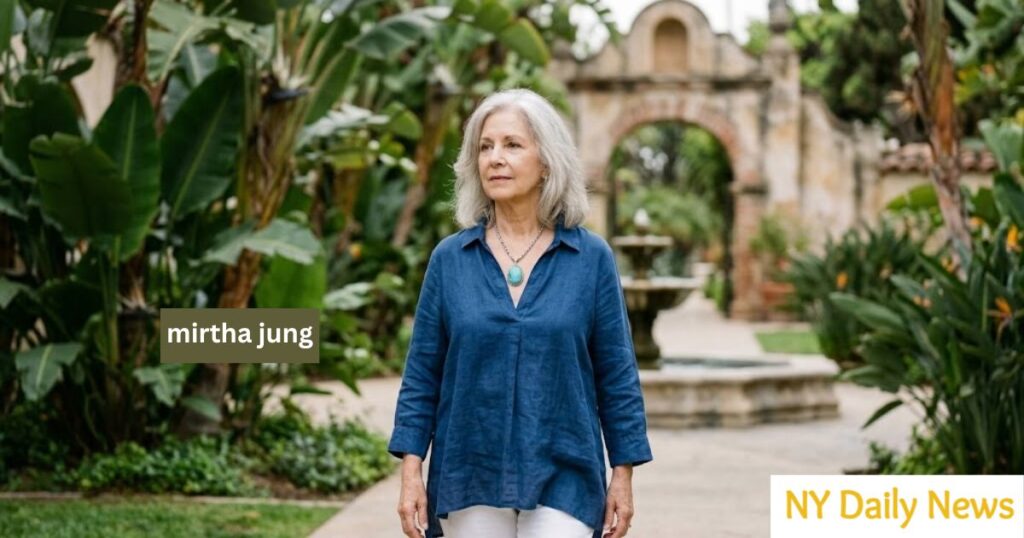
In the annals of American true crime and pop culture, few stories are as harrowing or as widely known as the rise and fall of the Medellín Cartel’s influence in the United States. While the world focused on the exploits of “Boston George,” the woman standing beside him, mirtha jung, lived a reality that was as volatile as it was glamorous. Her life, later immortalized by Penélope Cruz in the 2001 film Blow, became a cautionary tale of the excesses of the 1970s and 80s.
However, the cinematic portrayal of her life only scratches the surface of her true journey. Beyond the cocaine-fueled parties and the eventual legal downfall lies a story of profound personal transformation. In 2026, she is no longer defined by the shadow of her ex-husband’s criminal empire. Instead, she has become a symbol of resilience, having spent the last several decades rebuilding her life, maintaining sobriety, and seeking to mend the fractured bonds of her family.
The Early Years and the Medellín Connection
The origins of her story begin in Cuba, where she was born as Mirtha Calderón. Her early life was marked by the cultural and political shifts of the era, eventually leading her to cross paths with George Jung in the late 1970s. At the time, George was already a rising figure in the international drug trade, and their meeting sparked a relationship that was as intense as the illicit business they were involved in.
As a young woman, she was quickly integrated into the lifestyle of the cartel’s elite. This was a world characterized by extreme wealth, constant danger, and a total detachment from societal norms. Her involvement was not merely social; she was an active participant in the logistics and lifestyle of the trade, a role that brought her into contact with some of the most powerful and dangerous figures in the history of organized crime.
Life in the Eye of the Storm
Living during the peak of the cocaine era meant existing in a state of perpetual high-stakes adrenaline. The couple’s marriage in 1977 was a central event in this period, marking the union of two individuals who were deeply entrenched in the smuggling operations. Their home became a hub for associates and a warehouse for the products that fueled the cartel’s American expansion.
This lifestyle, while lucrative, was built on a foundation of sand. The constant threat of federal intervention and the internal betrayals inherent in the drug trade created an environment of extreme paranoia. For her, this meant navigating the complexities of motherhood while being surrounded by the very substances that were destroying her family’s future. The “glamour” often associated with this era was, in reality, a frantic effort to stay one step ahead of the law.
The Birth of Kristina Sunshine Jung
The most significant turning point in her life came in 1978 with the birth of her daughter. Kristina was born into a world of chaos, and her arrival served as the first real catalyst for change. While the drug trade continued to dominate their lives, the presence of a child added a layer of profound responsibility that neither parent was fully prepared to handle at the peak of their addiction.
The relationship between mother and daughter was deeply affected by the legal troubles and substance abuse that defined the early 1980s. As George’s legal situation worsened and the cartel’s power began to wane, the family was torn apart. The struggle to protect her daughter from the fallout of their choices became her primary focus, even as she herself battled the addictions that had taken hold during her years in the cartel.
Legal Fallouts and the Path to Prison
The law eventually caught up with the family in a series of high-profile arrests. Her own legal battles resulted in a term of incarceration, a period that forced a stark confrontation with the consequences of her lifestyle. The time spent behind bars was a period of forced reflection, away from the influence of George and the toxic environment of the drug trade.
During her imprisonment, she made a pivotal decision to change the trajectory of her life. She realized that to ever have a relationship with her daughter, she would have to leave the world of crime and addiction behind for good. This realization was the beginning of a long and difficult road toward sobriety, one that she committed to with a ferocity that few expected from someone so deeply embedded in the cartel lifestyle.
Overcoming Addiction and Finding Sobriety
Sobriety is a lifelong journey, and for her, it began in the late 1980s. After her release from prison, she successfully distanced herself from her former associates and the substances that had nearly cost her her life. This transition was not immediate; it required years of therapy, support groups, and a complete restructuring of her personal identity.
By the time the movie Blow was released in 2001, she had already been clean for over a decade. Her success in maintaining her sobriety is often cited as one of the most remarkable parts of her story. She proved that even after reaching the highest levels of the criminal world and the lowest depths of addiction, redemption was possible. In 2026, her commitment to a healthy lifestyle remains a cornerstone of her character.
Rebuilding the Relationship with Kristina
The most painful part of her history has been the distance between herself and her daughter. For many years, the two were estranged as Kristina navigated the trauma of her childhood. Rebuilding that trust has been a decades-long process, requiring patience, humility, and a consistent demonstration of change.
In recent years, there have been signs of healing. Both women have spoken about the difficulties of their past, but also about their desire for a future. The death of George Jung in 2021 served as another catalyst for the family to reflect on their shared history. Today, the focus is on moving forward and ensuring that the cycle of addiction and trauma does not continue into the next generation of their family.
Mirtha Jung in 2026: A Life of Peace
In 2026, mirtha jung leads a life that is a world away from the chaos of her youth. She resides in a quiet community, far from the prying eyes of the media. While her name will always be linked to the “Blow” era, she has reclaimed her narrative. She spends her time focused on her health, her personal interests, and her family, choosing to live a life of simplicity.
Her journey serves as a powerful reminder that our past does not have to be our prologue. From the height of the Medellín Cartel to a peaceful retirement, she has navigated a path that few could survive. Her resilience is her true legacy, offering hope to those who find themselves lost in the shadows of addiction or a troubled past.
Key Life Milestones
| Year | Event |
| 1977 | Married George Jung in a high-profile ceremony |
| 1978 | Birth of her daughter, Kristina Sunshine Jung |
| 1980s | Arrest and incarceration for drug-related offenses |
| 1990 | Divorce from George Jung finalized |
| 2001 | Release of the film Blow, bringing her story to global fame |
| 2021 | Death of George Jung; period of family reflection |
| 2026 | Living a private life focused on sobriety and family healing |
Frequently Asked Questions
Is she still alive in 2026?
Yes, she is still alive and continues to live a private life. She has successfully maintained her sobriety for over 35 years.
What happened to her after her divorce from George Jung?
Following the divorce and her release from prison, she focused on rehabilitation and stayed out of the public eye. She worked various jobs and dedicated herself to being a mother and, eventually, a grandmother.
Did she ever return to the drug trade?
No. After her incarceration in the 1980s, she made a clean break from her criminal past and has had no further legal issues.
How is her relationship with her daughter today?
While the relationship has been historically difficult, there have been reports of reconciliation and mutual respect as they both work through the legacy of their family’s history.
Conclusion
The life of mirtha jung is much more than a cinematic plot point. It is a human story of survival against all odds. While she was once a key figure in a world of unprecedented crime, her greatest achievement is her ability to walk away from it and build a life of dignity. In 2026, she stands as a testament to the fact that it is never too late to change. Her story of redemption continues to resonate, providing a grounded perspective on the real-world consequences of the “fast life” and the enduring power of a mother’s love.