
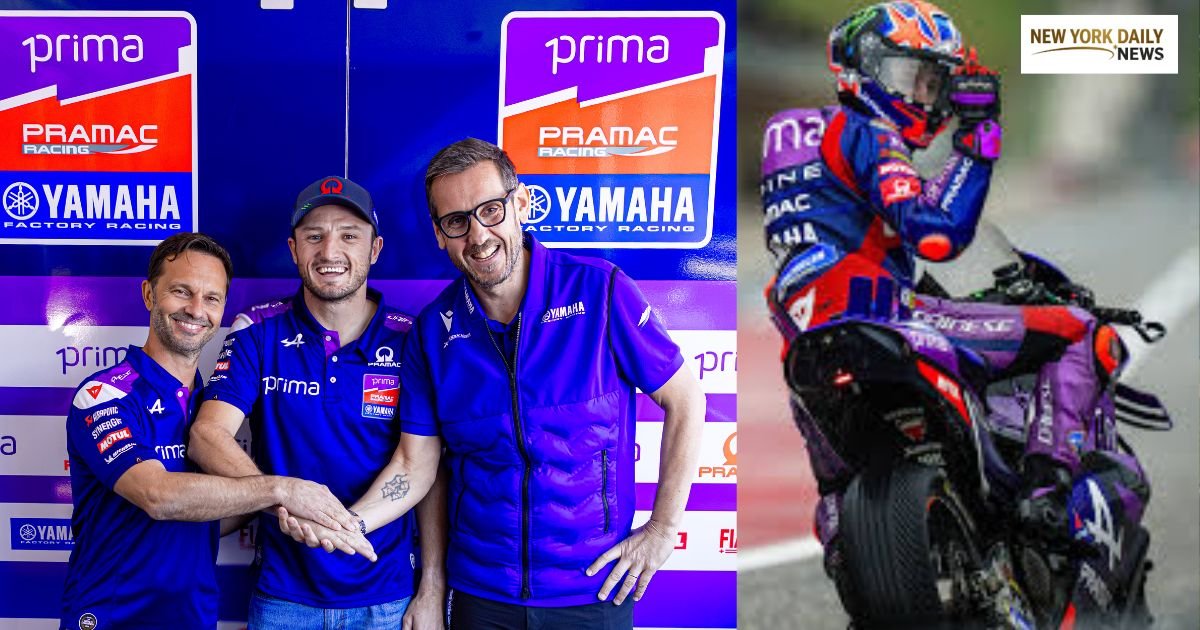
The landscape of the premier class is shifting as the grid prepares for a final year of 1000cc dominance before the 2027 technical overhaul. Central to this evolution is the strategic partnership of jack miller yamaha motogp 2026, a deal that solidifies the Australian’s role as a cornerstone of the Iwata factory’s resurgence. Miller, known for his straight-talking nature and vast technical knowledge across multiple manufacturers, has become an indispensable asset for the Prima Pramac Yamaha squad. His extension into the 2026 season signifies Yamaha’s commitment to experience as they navigate a massive engineering transition.
As of early 2026, the paddock’s attention is fixed on how Miller’s feedback will shape the development of Yamaha’s highly anticipated V4 engine project. After years of sticking to the traditional inline-four configuration, the Japanese manufacturer has finally pivoted to match the architecture of their European rivals. In this high-stakes environment, the presence of a rider who has won on Honda, Ducati, and KTM machinery provides Yamaha with a unique “rosetta stone” for performance data. The 2026 season is not just about points for Miller; it is about building the foundation for a new era of Japanese racing dominance.
The Strategic Importance of Experience
In an era where many teams are chasing the “next big thing” in the form of teenage Moto2 prodigies, Yamaha’s decision to retain a veteran highlights a different priority. For the 2026 campaign, the factory needs a rider who can differentiate between a mechanical flaw and a setup issue. Miller’s decade-long career in the premier class has equipped him with a sensory understanding of bike behavior that younger riders often lack. This “human telemetry” is vital when a factory is introducing a brand-new engine configuration like the V4.
The choice to keep the Australian was also influenced by his immediate impact on the team culture within the Pramac garage. Since his return to the satellite outfit in 2025, the atmosphere has been described as proactive and technically focused. By choosing him over other younger candidates, the management has prioritized a steady hand to guide the ship through the turbulent waters of rapid development. This stability allows the engineers to focus on the hardware, knowing the feedback they receive from the seat is accurate and seasoned.
Transitioning to the New V4 Engine Project
The most significant storyline of the year is undoubtedly the departure from the inline-four engine. Yamaha’s transition to a V4 engine marks a seismic shift in their racing philosophy, aimed at curing the top-speed deficit that has plagued them for seasons. Miller is uniquely positioned to lead this change because he has spent almost his entire career—prior to joining Yamaha—on V4-powered bikes. His familiarity with the braking stability and power delivery of a V layout is something his factory teammates, Fabio Quartararo and Alex Rins, largely lack.
Throughout the 2026 pre-season tests, the focus has been on integrating this new power unit into a chassis that maintains Yamaha’s famous corner speed. The feedback provided by the “Thriller” has been instrumental in refining the electronics and engine braking strategies. Because he knows how the Ducati and KTM power units behave in the “engine-out” phase of a corner, he can point Yamaha’s engineers toward the specific areas where they can find an advantage over their rivals.
A High-Profile Partnership with Toprak Razgatlioglu
The 2026 season also marks the arrival of one of the most anticipated rookies in recent history: Toprak Razgatlioglu. Moving over from a legendary career in World Superbikes, the Turkish rider brings a spectacular riding style that many believe will translate well to the premier class. Partnering him with a veteran like Miller is a calculated move by Pramac and Yamaha. While Toprak explores the limits of the YZR-M1, he can rely on his teammate’s data and advice to shorten his learning curve.
This “mentor-and-pupil” dynamic—though both are world-class athletes—creates a balanced garage. While the newcomer generates excitement and potential “X-factor” results, the veteran ensures that the technical direction of the bike remains on track. The contrast in their styles is also beneficial; Toprak’s aggressive front-end usage combined with Miller’s rear-end slide control provides the engineers with a broad spectrum of data. This dual approach is essential for making the M1 a more versatile machine that can suit different riding styles.
Analyzing Recent Performance and Consistency
To understand why the contract renewal was so vital, one must look at the consistency Miller has brought to the project. During the 2025 season, despite the bike being in a transitional phase, he secured several top-ten finishes, including a standout performance at the Grand Prix of the Americas. His ability to qualify well and provide strong starts has often placed the Yamaha in positions it perhaps didn’t deserve to be based on pure pace alone.
Consistency in feedback is just as important as consistency in results. Unlike riders who might fluctuate in their assessments based on their mood or a single good lap, the Australian has remained steadfast in his technical critiques. This honesty has occasionally been blunt, but it is exactly what Yamaha requested when they brought him on board. By the start of 2026, this partnership had already resulted in a more stable aerodynamic package and better initial acceleration out of slow-speed corners.
The Role of Satellite Teams in Development
The role of the Prima Pramac team has changed significantly since their switch from Ducati to Yamaha. No longer just a customer team, they are now a true extension of the factory’s development arm. This means that for the 2026 season, the bikes in the satellite garage are virtually identical to those ridden by Quartararo and Rins. Having a rider of this caliber in the satellite squad essentially gives Yamaha four factory-spec data streams every weekend.
This expanded role is where the Australian truly shines. He has always been a rider who enjoys the “grind” of testing new parts during a race weekend. While some riders find it distracting to test three different swingarms during a Friday practice, he embraces the challenge. This work ethic has endeared him to the Japanese engineers, who value his willingness to sacrifice a potential qualifying lap for the sake of long-term development goals.
Physical Fitness and Mental Resilience
At 31 years of age in 2026, questions about longevity are natural in such a physically demanding sport. However, his performance at the 2025 Suzuka 8 Hours, where he finished on the podium for the factory Yamaha team, proved that his endurance is at an all-time high. The grueling nature of endurance racing requires a level of physical and mental toughness that directly translates back to the intensity of a MotoGP sprint and main race weekend.
Mental resilience has also been a key theme. The mid-2025 season was filled with rumors regarding his future, yet he remained focused and vocal about his desire to see the project through. That “never-say-die” attitude is a core part of the Australian’s brand. In 2026, with the contract secured, he appears more relaxed and focused than ever. This mental clarity is a dangerous weapon for a rider who already possesses some of the best natural talent in the world.
Looking Toward the 2027 Regulations
While the immediate focus is on the current season, the work being done in 2026 is a direct prelude to the 2027 rule changes. When the engines drop to 850cc and aerodynamics are significantly scaled back, the “feel” of the rider will become even more important. By securing this seat for 2026, the Australian has ensured he is in the room when the final blueprints for the 2027 bike are drawn up.
His influence on the future of the sport cannot be overstated. As a rider who has seen the evolution of the 1000cc era from its early days to its complex, aero-heavy conclusion, his input on the “stripped-back” 2027 machines will be priceless. Yamaha is betting that the chemistry developed throughout 2026 will lead to a championship-caliber machine when the rules reset. For the fans, seeing the #43 continue to battle at the front is a win for the sport’s personality and technical depth.
Jack Miller MotoGP Career and 2026 Overview
| Category | Detail |
| Current Team | Prima Pramac Yamaha MotoGP |
| 2026 Teammate | Toprak Razgatlioglu |
| Manufacturers Ridden | Honda, Ducati, KTM, Yamaha |
| Primary Project | Yamaha V4 Engine Development |
| 2025 Best Result | 5th (Circuit of the Americas) |
| Notable Achievement | 2nd Place at 2025 Suzuka 8 Hours |
| Bike Specification | Factory YZR-M1 (2026 Spec) |
Frequently Asked Questions
Is Jack Miller still with Yamaha in 2026?
Yes, it was officially confirmed in late 2025 that the Australian rider renewed his agreement with Yamaha Motor Co. to remain with the Prima Pramac Yamaha MotoGP team for the 2026 season.
Who is Jack Miller’s teammate for the 2026 season?
His teammate for 2026 is the 2024 World Superbike Champion, Toprak Razgatlioglu, who is making his highly anticipated full-time debut in the MotoGP class.
Why did Yamaha choose to keep an experienced rider like Miller?
Yamaha prioritized experience to help develop their new V4 engine project. Miller’s extensive history with V4 engines at Ducati and KTM makes him the ideal candidate to provide technical feedback during this transition.
Has Jack Miller won a race with Yamaha yet?
As of the start of the 2026 season, he is still chasing his first premier class victory with Yamaha, though he has already secured a podium in endurance racing with the brand at the Suzuka 8 Hours.
Conclusion
The story of the jack miller yamaha motogp 2026 contract is one of mutual necessity and shared ambition. Yamaha needed a rider with the technical pedigree to navigate their most significant engineering shift in decades, and the Australian needed a project where his vast experience was truly valued. As the 2026 season unfolds, the fruits of this labor are beginning to show in a more competitive M1 and a revitalized factory spirit. Whether he is leading the development of the V4 or mentoring a high-profile rookie, his role in the Yamaha family has never been more vital.